.png)







Types of Countertops: Pros, Cons, and How to Choose
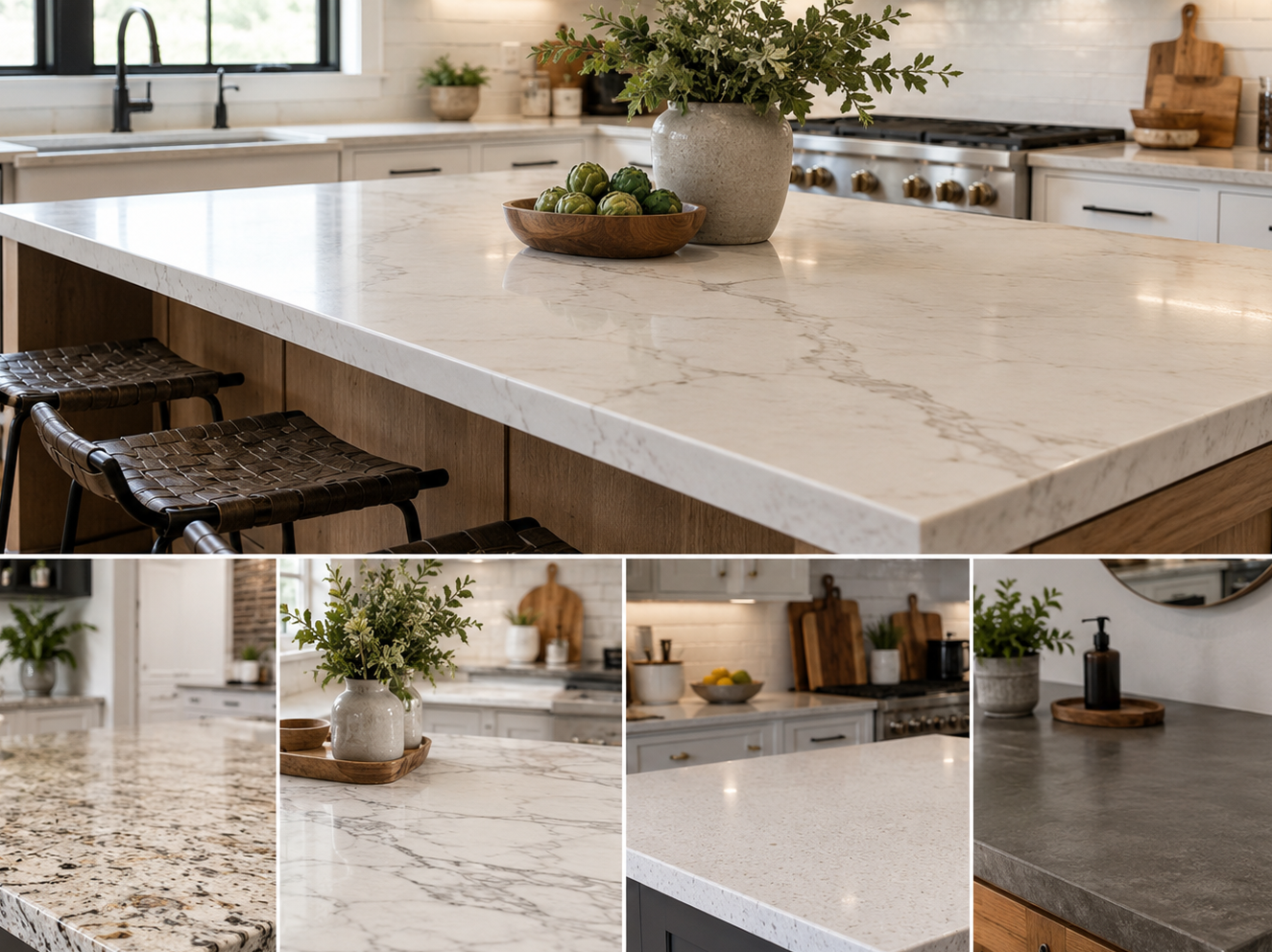
Your countertop is one of the hardest-working surfaces in your home. It gets chopped on, spilled on, heated, and cleaned on a regular basis, and it's looked at every single day. Getting the material right matters more than most people realize until they've lived with the wrong one.
This guide covers every major type of kitchen countertop, the honest pros and cons of each, and how to match the material to the way you actually use your kitchen.
Key Takeaways
- Quartz countertops are heat and stain resistant, low maintenance, and the most popular choice for good reason.
- Granite countertops bring natural stone character and durability, but require sealing to stay in good shape.
- Butcher block and wood countertops add warmth to kitchen design but need more ongoing care than stone or engineered options.
- Solid surface countertops are seamless, repairable, and a strong mid-range choice for busy kitchens.
- Concrete countertops and stainless steel countertops suit specific styles and lifestyles, not every kitchen.
- Understanding the pros and cons of each material before you buy saves money and regret down the line.
Quartz Countertops
Quartz countertops are engineered stone, made from ground quartz bound with resin. They don't occur naturally, which means color, pattern, and consistency are controlled during manufacturing. That predictability is one of the main advantages: you get a uniform result without the variation that comes with natural stone.
Quartz is non-porous, so it doesn't need sealing and resists staining well. It's durable and easy to clean. The one caution is heat. Quartz can be damaged by hot pans placed directly on the surface, so trivets are worth keeping nearby. For most homeowners, quartz countertops offer the best combination of performance and low maintenance across kitchen countertop options.
Granite Countertops
Granite is a natural stone, quarried in slabs and cut to fit. Each piece is unique, with its own veining, pattern, and color variation. For homeowners who want the character of natural stone in their kitchen design, granite delivers in a way engineered materials can't fully replicate.
It's hard and heat resistant, making it practical for serious cooking. The trade-off is maintenance. Granite is porous and needs to be sealed on a regular basis to resist staining. It can also chip or crack at the edges under impact. Installed well and maintained properly, granite countertops are one of the most enduring kitchen countertop materials available.
Solid Surface Countertops
Solid surface countertops are made from acrylic or polyester combined with natural minerals, resulting in a non-porous, seamless surface that can be fabricated with integrated sinks. That makes them particularly easy to clean and a practical choice for kitchens that see a lot of daily activity.
One of the more useful qualities of solid surface is repairability. Minor scratches can often be sanded out, which isn't possible with stone or laminate. They're not as heat resistant as quartz or granite, so hot pans are a concern. For a kitchen that values a clean, uninterrupted look with manageable upkeep, solid surface countertops are a strong option.
Butcher Block and Wood Countertops
Wood countertops bring warmth and texture that stone and engineered materials simply don't have. Butcher block is a natural cutting surface, repairable, and develops character over time rather than showing wear as damage. The care requirements are real, though. Wood needs oiling on a regular basis and is vulnerable to water damage if spills aren't wiped up quickly. It can also be damaged by heat, so hot pans should never go directly on the surface.
For a kitchen island or dedicated prep area, it's a distinctive and practical choice. As the primary kitchen countertop material in a busy household, the maintenance commitment is worth thinking through honestly before deciding.
Concrete Countertops
Concrete countertops can be cast in any shape, tinted any color, and finished in a range of textures that no other kitchen countertop material can match. For homeowners who want something truly custom, concrete delivers.
The trade-offs are significant. Concrete is heavy, needs professional installation, requires sealing, and can develop hairline cracks over time. It also costs more than most kitchen countertop options. If the aesthetic is what you're after and you understand the maintenance involved, it's worth it. If low maintenance is the priority, it probably isn't the right fit.
Stainless Steel Countertops
Stainless steel countertops are a professional kitchen staple for good reason. They're heat and stain resistant, non-porous, and easy to clean. The downsides are visible: stainless steel scratches easily and shows fingerprints constantly. The look reads as industrial and doesn't suit every kitchen design, but for homeowners who love that aesthetic and accept the upkeep, it's a long-lasting choice.
How to Choose the Right Countertop for Your Kitchen

Matching the kitchen countertop material to your lifestyle matters more than matching it to a trend. A few honest questions worth asking before you decide:
- How much do you cook? High-use kitchens benefit from durable, heat-resistant surfaces like quartz or granite.
- How much maintenance are you willing to do? Natural stone and wood countertops need ongoing care. Quartz and solid surface do not.
- What's your kitchen design direction? Warm and natural points toward wood or granite. Clean and contemporary points toward quartz or solid surface.
- What's your budget? Quartz and granite sit at different price points. Concrete and stainless steel tend to cost more. Solid surface offers good value in the mid-range.
If you're working through these questions and want expert guidance, the team at Molyneaux Home can help you narrow it down based on your specific kitchen, lifestyle, and budget. Their countertop consultants know the full range of kitchen countertop materials and bring honest recommendations to every conversation.
Frequently Asked Questions
What is the most durable kitchen countertop material?
Quartz and granite are both highly durable kitchen countertop materials. Quartz is an engineered stone and non-porous, so it resists staining without sealing. Granite is harder but requires regular sealing to maintain performance. Both hold up well to heavy daily use.
Which countertops are easiest to maintain?
Quartz countertops are the lowest maintenance option in the category. They don't need sealing, are easy to clean, and resist most staining. Solid surface countertops are also relatively low maintenance and have the added benefit of being repairable if surface damage occurs.
Can countertops be damaged by heat?
Yes, most can. Quartz, solid surface, wood, and concrete countertops can all be damaged by heat from hot pans placed directly on the surface. Granite and stainless steel are the most heat resistant options. Using trivets is a simple habit that protects any countertop regardless of material.
What's the difference between natural stone and engineered stone countertops?
Natural stone like granite is quarried and cut directly from the earth, with each slab unique. Engineered stone, like quartz, is manufactured from ground stone bound with resin, giving more consistency in color and pattern. Both are durable kitchen countertop options with different maintenance needs and visual characteristics.
Conclusion
There's no single best countertop material. There's the right one for your kitchen, your cooking habits, and the level of care you're realistically going to give it. The key is understanding the honest pros and cons of each option before you commit.
Schedule a free in-home estimate with Molyneaux Home and get the guidance you need to choose with confidence.


.avif)

